The Confrontation Clause and COVID Masks
Author:
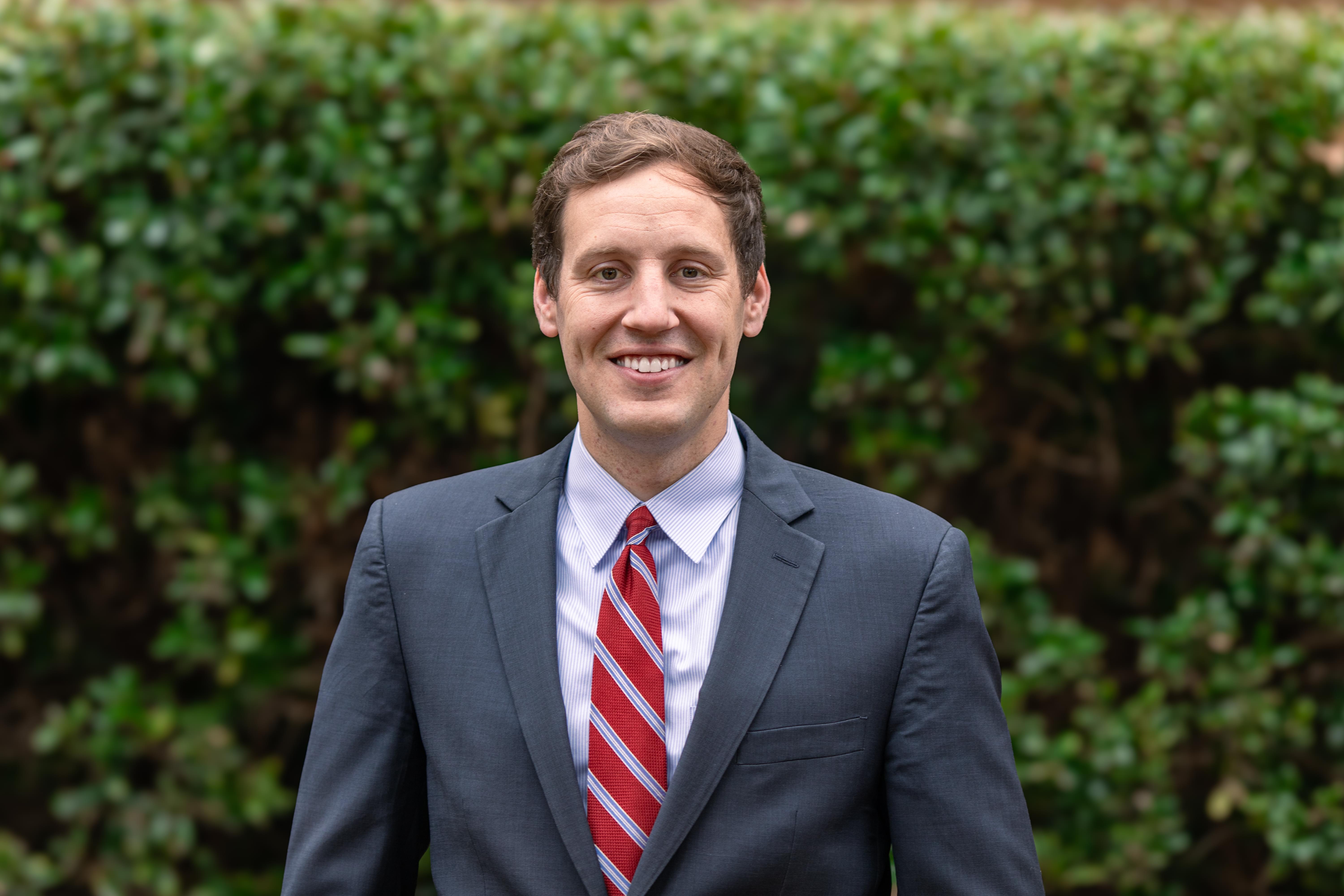
G. Alexander Nunn
 Editor:
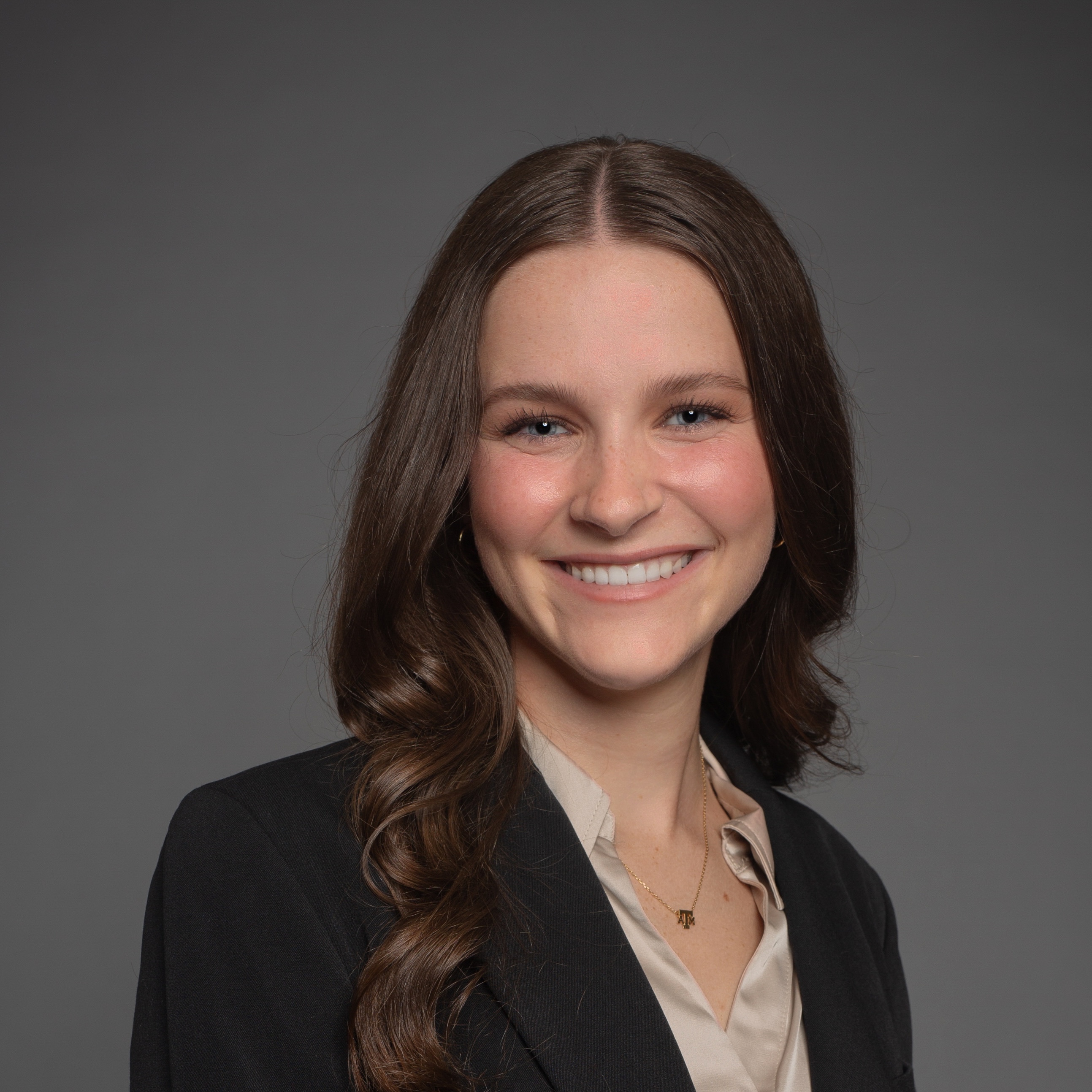
Grace Chapman
Editor:
Grace Chapman
, The Confrontation Clause and COVID Masks, in Nunn on Evidence (January 27, 2026). | Permalink
This past November, the Texas Court of Criminal Appeals, the state’s highest criminal tribunal, decided Smith v. State, a case situated at the intersection of Confrontation Clause doctrine and pandemic-era masking. The court held that trial judges may not require witnesses to testify in surgical masks over a confrontation objection absent case-specific findings that the restriction advances an important public interest. On its face, that holding appears narrowly procedural and, perhaps, sensible enough. But notably, the opinion rests on the key premise that jurors require access to a witness’s full face to assess credibility and thereby vindicate the Sixth Amendment’s confrontation guarantee.
That premise warranted far more scrutiny than it received. Smith presented an opportunity to interrogate the evidentiary foundations of demeanor evidence, foundations that rest on specious intuitions about lie detection which decades of empirical research have called into serious question. Regrettably, the court declined that invitation, thereby permitting evidence law’s longstanding reliance on “folk psychology” to march on.
Case Summary
Champagne Smith was tried in Harris County in January 2023 for aggravated assault. The trial court required “all persons” to wear surgical masks throughout the proceedings, including during voir dire and witness testimony, permitting removal only for in-court identifications. Before jury selection, defense counsel objected under the Sixth Amendment, explaining that jurors needed to see “smirks, pouting,” and other facial gestures to assess credibility and satisfy the Confrontation Clause. The State did not respond, but the trial court nevertheless overruled the objection. Two eyewitnesses to the assault testified while masked, and the jury convicted.
The Fourteenth Court of Appeals, an intermediate appellate court in Texas, reversed. The court held that the masking policy violated the Confrontation Clause because it interfered with face-to-face confrontation and the jury’s ability to observe demeanor.
The Court of Criminal Appeals (again, Texas’s highest criminal tribunal) agreed with this holding. On the merits, the court treated the dispute as governed by the confrontation framework set out by the United States Supreme Court in Coy v. Iowa and Maryland v. Craig, as well as a number of analogous Texas cases. Craig’s formulation proved particularly influential in the court’s reasoning because it frames confrontation as a set of protections that travel together, including the requirements that a witness testify under oath in the defendant’s presence, that they be cross-examined by the defendant, and that the jury can observe how their testimony is given.
Against this backdrop, the Smith court decided that witnesses masked while testifying pose Confrontation Clause problems. A surgical mask does not remove the witness from the courtroom and does not impede cross-examination in the way closed-circuit testimony can, but it restricts the traditional face-to-face encounter and limits jurors’ access to lower-face expression, which the court treated as central to demeanor.
The Texas court noted that, pursuant to Craig, deviations from traditional “unmasked” testimony are permissible only when necessary to further an important public interest, supported by individualized findings in the particular case. In Smith, however, every witness was masked as a matter of categorical policy. Masking was mandatory, and the trial court made no record supporting necessity. The court therefore held that testimony from the masked witnesses violated the Confrontation Clause, remanding the case to the court of appeals for further harmless error review.
Nunn’s Take
If you teach Evidence or Criminal Procedure, Smith is a useful classroom vehicle, sitting at the intersection of confrontation doctrine, COVID-era masking, and witness credibility. Perhaps most notably, the opinion is also a reminder that some of the most consequential assumptions in adjudication are ones that courts recite without argument.
The assumption doing the heavy lifting here centers around witness demeanor. The court invokes Craig’s statement that face-to-face confrontation helps the jury “observe the demeanor” of the witness and thus assess credibility, and it echoes Mattox’s formulation that jurors should be able to decide whether a witness is “worthy of belief” by watching how testimony is given. Defense counsel’s objection channels the same intuition. If jurors cannot see a witness’s facial gestures, counsel implied, they cannot truly evaluate truthfulness.
That argument, however, runs headlong into an extensive body of work by Professor Julia Simon-Kerr and others, which scrutinizes demeanor evidence’s reputation as a reliable indicator of credibility. Demeanor, Simon-Kerr argues, is treated as foundational across American adjudication, from the Confrontation Clause to immigration hearings to civil procedure. (It’s even served as the basis for an entire TV series.) But in truth, the case for demeanor as a lie-detection tool is empirically weak and normatively problematic.
Consider, first, the empirical problems with demeanor evidence through two illustrative studies. Decades of deception research test whether observers can distinguish truth from lies by watching behavior, facial affect, eye contact, posture, and vocal cues, and the results are consistently deflationary. Professors Charles F. Bond and Bella M. DePaulo have found average accuracy around 54 percent, a margin only slightly above chance, and professional “lie-catchers” do not reliably outperform lay observers.
A second empirical data point comes from a 2016 study by a team of researchers on “veiled witnesses,” which examined whether face coverings affected observers’ ability to detect deception. The authors found that observers were more accurate at detecting deception when witnesses wore niqabs than when faces were fully visible. And notwithstanding fair caveats about the external validity of the experimental findings, the study certainly provides a basis for questioning the simple inference that more facial information means better credibility assessment, suggesting instead that faces may add noise rather than signal.
On the normative front, the evidence literature anticipated the problems posed by demeanor evidence long before COVID brought the issue to a head. Olin Wellborn’s article Demeanor remains a touchstone because it refused to romanticize the trial judge’s “superior” access to credibility. Wellborn argued that demeanor evidence is overvalued, that the inferences commonly drawn from it are unreliable, and that doctrines of deference built on demeanor rest on an untested premise. Jeremy Blumenthal surveyed the behavioral science on nonverbal cues and reached a similar conclusion, and Max Minzner has argued that the law’s confidence in demeanor persists through cognitive bias and a failure to take context seriously rather than through any stable body of validating evidence. Joseph Rand’s work on race and lie detection adds the point that demeanor judgments are not merely inaccurate but uneven, tracking social power in predictable ways. And Emily Spottswood summarized the state of the literature most aptly when she wrote that “visually observing witnesses at best contributes nothing to a credibility determination and at worst increases the likelihood that a fact-finder will get it wrong.”
Amid all of these excellent articles, Simon-Kerr’s distinctive contribution is to connect this empirical skepticism to the law’s moral language about credibility. The Supreme Court’s characterization of demeanor evidence as an indicator of whether a witness is “worthy of belief” is not a neutral description of cognition. Rather, it constitutes a normative invitation to translate presentation into virtue, treating credibility as an attribute of a person’s character rather than an assessment of a statement’s reliability. In Credibility by Proxy, for instance, Simon-Kerr argues that many credibility rules function as proxies for social standing and moral conformity, distributing belief along culturally familiar lines while describing the process as neutral assessment.
Masks on testifying witnesses illuminate this dynamic because they interfere with performance. A masked witness cannot signal sincerity through the lower half of the face in the conventional way, and jurors cannot as easily apply the heuristics they have been trained, by culture and by jury instructions, to apply.
That brings us back to Smith and to a question courts have largely avoided. What, exactly, does the Confrontation Clause protect when it insists on face-to-face confrontation? According to the Smith court, seeing the witness, including facial expression, helps jurors evaluate the accuracy and sincerity of testimony. But the literature demonstrates that this claim is empirically unstable and normatively questionable.
What would a better opinion have looked like? Simon-Kerr and Kiel Brennan-Marquez, in their recent article Judging Demeanor, provide a persuasive roadmap for handling these cases. Simon-Kerr and Brennan-Marquez recognize that defendant demeanor evidence invites propensity reasoning and facilitates racial and cultural subordination. At the same time, however, they also acknowledge that seeing and being seen at trial can serve values independent of veracity, including the dignity of the accused and the moral seriousness of judging another person. That concession is important because it suggests a cleaner way to write cases like Smith. Courts can insist on face-to-face confrontation as a structural and dignitary demand of adversarial adjudication, while being candid that facial observation is not, on current evidence, a dependable credibility algorithm.
The remand posture in Smith forces this issue into the open, because harmless error doctrine requires the court of appeals to decide whether the mask requirement contributed to the verdict. That inquiry cannot be done honestly if “demeanor” is treated as a magic word. The analysis should ask what credibility disputes were actually live, what parts of the State’s case depended on masked testimony, what corroboration existed, and whether the mask restriction plausibly changed how jurors interpreted the evidence that mattered. To be sure, when courts restrict face-to-face confrontation, even for sensible reasons, they should be explicit about what value is being served and what tradeoff is being made. Public health is a real interest, and so are witness participation and trial continuity. But the constitutional analysis should not depend on a casual assertion that credibility lives in the lower face.
See Also
Kiel Brennan-Marquez & Julia Simon-Kerr, Judging Demeanor, 109 Minn. L. Rev. 1503 (2025)
Max J. Minzner, Detecting Lies Using Demeanor, Bias, and Context, 29 Cardozo Law Review 2557 (2008)
Julia Simon-Kerr, Unmasking Demeanor, 88 Geo. Wash. L. Rev. Arguendo 158 (2020)
Julia Simon-Kerr, Law's Credibility Problem, 98 Wash. L. Rev. 179 (2023)
Julia Simon-Kerr, Credibility by Proxy, 85 G.W. L. Rev. 152 (2017)
Emily Spottswood, Live Hearings and Paper Trials, 38 Fla. St. U. L. Rev. 827 (2011)
Olin Guy Wellborn III, Demeanor, 76 Cornell L. Rev. 1075 (1991)


Password Change Information
Your account uses a social login provider. To change your password, please visit your provider's website.